Friday, 22 March 2019

Case study - Whiskey, words & a shovel II, r.h Sin

Whiskey, words and a shovel II is a poem book by R.H (Reuben Holmes) Sin, consisting of his emotional experiences capturing the raw truth of what living and loving is. The book does not have illustrations or photographs, simply only the powerful stanzas and dramatic words. The artist's intention of creating the book being a place to document thoughts, along with allowing his audience to relate to his own experiences, as indicated through the use of certain poetry in second person. The audience built and overall response has been positive, as this book is the second in a series. The first being Whiskey, words & a shovel I, followed by vol II and III. I have chosen to research the second book as I feel it's an interesting part of a series to embark on in terms of audience development and artist thought development. The book heavily explores the theme of love and heartbreak and living through this with powerful symbolic features, e.g, the poem titled "stubbornness" (image)
 The broken structure reflects the language used, "broken," "stubborn," "sadly." An overall target audience of young adults, and late teenagers, that age group being the prime demographic relating to similar emotions.
 Layout wise, the front cover of the book is simply black and white with a triangle and abstract shape in the middle of the page. The idea of a shape in the foreground is similar to the composition of Note to Self, though this front cover has less colour. The text is again simple, though the back cover text is dramatic, consisting of just the poem, "I'd kill the distance to get to you" isolated. The power this has is a reflection R.H Sins impeccable and powerful vocabulary. I have not yet considered the back cover of my book, however Sin's work has sparked this. The book uses formal yet recognisable language, and the overall style of writing links to the romantic and poetry genre.
A poem I have read in particular and in which I would like  write similar to titled "resolutions" is "Changing for the better,
ready for something better." this exploring the welcoming side of our project theme, open to new and better things happening within the borough of culture, Along with "the future" -
"I hope your heart discovers the truth about the type of love that you deserve. " This exploring the fellowship side of the theme, incorporating more love / relationship elements.  The data and official word analyse of "the future" consists of 15 words as one whole sentence, with 21 syllables (https://www.online-utility.org/text/analyzer.jsp) Sin's intention of writing the poem explores events that he has experienced, and letting the audience know and realise they can relate to something similar.  The language techniques themselves that have been used include smilies and formal language, however I have not found an example of personification - this being a technique I would like to add within my language book, as its definition includes giving a natural element of something such as the sun, a human attribute. - "the sun smiled at us" Using this technique will also reflect and act as a symbol to the natural element of the theme.
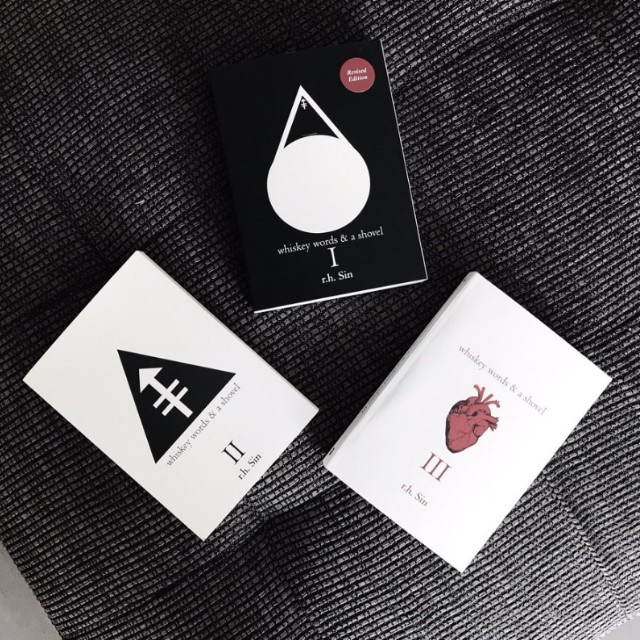
Image result for whiskey, words and a shovel IIContinuing, the audience as stated may be young adults who can emotionally relate, or have an interest in the themes explored. The product has been marketed on social media sites, such as Instagram. Sin has had advertisements of black and white pages in his book, along with his own clothing products with engraved wording from the books on the app. This has been marketed to the target audience as young adults use Instagram frequently, the most ironic being the poetry about relationships and love projected onto the site where the idea of having a perfect relationship and consistent viewings of others personal lives is visible. The irony of this makes the poetry even more successful,  and has been successful due to the followup of Whiskey, words and a shovel III. Sins journey to becoming a writer also involves social media, his spark that got into writing being the joy of trying to express emotion or something to say under 140 characters when Twitter had an 140 word limit. In terms of advertising for my product, I would follow similar social media sites, such as Instagram due to the aesthetic stigma users have, along with We Heart it, where there is an audience for the books I have researched due to the visual pleasements of them.
The book has been published by Andrews McMeel Publishing, a large company who have also published similar poetry books such as the sun and her flowers (Rupi Kaur) and the witch doesn't burn in this one (amanda lovelace) the company also specialise in issuing comics, calender's and toys. (http://publishing.andrewsmcmeel.com/our-company/submissions) the reach is universal. Audiences can also buy calender's directly from the site. Issues that the company may face includes copyright or submission processes, with thousands of submissions daily.

Wednesday, 20 March 2019

Case study - Note to self, Connor Franta

The product I am conducting research under is a bio/autobiography titled Note to Self by Connor Franta consisting of personal notations the artist had, this including observations, personal thoughts, emotions and an overall "scrapbook" of the artists mind at certain time periods captured in poetic words. The book has two meanings, one personal for the artist - the fact that he wanted to document his emotions into a widely accessible piece to an audience and the other for that audience - Franta being an online influencer, starting of being a youtuber/
vlogger, photographer and developing to a  clothing creator, his audience have followed and grown over his career, developing an attachment or so called 'fan base.' Franta's previous memoir titled 'A Work in Progress' being successful both to the specific audience and outside world, becoming New York Times Bestseller, he decided to create another piece, this being reasoning behind the creation of the product and indicating his audience socially contextual wise. Franta embarked on the idea that his young age was different to the typical age of creating a memoir, though this possibly being the reason the book did so well. The overall presumed target audience being teenagers, but also young adults, as the book, Note to Self, explores deeper themes, this including depression, love and heartbreak, travelling and new experiences, anxiety, etc. The book offers advice at ends of poetry and said experiences, catering and catching the audience's attention to the fullest. Franta embarks on things he has been through over the course of a year, photographs being ones taken on his journeys and day to day life, and poems recorded in the moment. The poems include times of days and titles, these being notes Franta took in his iPhone at particular moments of high emotion, this being whats makes the wording so real and raw. The overall message of the book possibly being hope for those going through similar emotional situations, or inspiration.The response from the book after its distribution included a wide interaction between Tumblr and We Heart It users and a demographic of photographers. As those websites are seen as uploading aesthetically pleasing images and or videos, the composition and photographing within the book seemed perfect and fit the aesthetic vibe.

book imageThe layout of the book is aesthetic and consists of various patterns and pastel colours. The cover has been constructed with dark pink leaves and a rose, with faded shadow effects placed perfectly in the square foreground. The writing and font text is simple and lowercase in reflective series pink. Besides the writing, the background and hard surface of the book is a soft hue pink, the cover as a whole explores many shades of pink with subtle white faded areas. The creative intention behind these colours could be to provide a calm, soft mood (provided by the pastel.) The fonts and text colours are not strikingly bold, further contributing to this idea. Initially viewing, I feel the front cover is creatively intriguing, an overload of pink by a male artist further breaking stereotypes. The concept behind my idea exploring a similar delicate storyline of a dream, I could also consider relaxed, italic type text fonts. Though I would contrast and change other elements inspired by the Note to Self cover, such as the photograph at the front. The composition of a photograph in the foreground being a square is something I would take inspiration from however the actual photograph being an experiment with black and white switching to colour, somewhat editorial photography and a solid white background or other solid colour is something I would like to experiment with. These elements will come next, in terms of production documentation and complete research under similar artists. The text within the book includes bold headlines and fainted time text, indicating when Franta wrote the note, followed by the structure of free verse poems and pages. The pages with poetic language are placed in the middle. My favourite composition /page within the book being a page where the quote links directly to the photograph, but in a hidden manner - The phrase being "sometimes the quiet ones
are yelling on the inside" with the photograph on the previous page being a hand reaching upto the sky. The page in which the phrase is visible, the photograph is see through. This adds depth not only through written words but a photograph accompanying. Though this may technically / physically be difficult, I will consider the manner of portraying a message this deeply, and being especially creative when planning the pages.
Language wise, the whole book is from the perspective of Connor, metaphors and similes are used in the poetic language, for example, "our love was like a wildfire... but eventually every flame must go out" As the book is essentially 'notes' to the artist himself, some words of poetry and free verse are harder to understand.

The product was made through the process of large-scale printing, distributing initially in the USA then to further areas such as the UK, Australia, Asia. Marketing and getting the book out there included the creation of a trailer (link) as an introduction along with book tours within the USA,UK and Australia. Due to the online audience Franta has consisting of audiences around the world, there was an initial start point to where buyers of the book would start from and spread further through recommendations, etc. The company who published the book are Keywords press, commonly known for publishing social influences pieces of work. The company is big socially wise under the audience of what young teens and adults would buy, however in the wider industry of publishing books the company are smaller. The reach the company has is therefore revolved around individuals who have platforms on social medias, then developing on these to merch and clothing, websites, books, etc. The regulations or issues that the book may face includes copyright of the poetry wording or actual photographs. 'Note to self' overall has and will act as a inspiration to what I desire to create.

Saturday, 16 March 2019

Reflection - week 1

First evaluation over the past week starting the project, pre production notes used -

- Initially getting the theme sparked ideas under photography as I liked hearing the nature, landscape side to the theme.
- Word count was challenging.
- Verbal presentation clarified idea more than before in my head.
- Managed to get three books and expanded my research, must make sure I continue this

- Researching themes under poetry in older centuries was challenging to understand at times.
- Goals such as finishing historical research on 17/03/19 have been good as they've kept me on top of my work
- Feedback of researching Ansel Adams complete - researched in historical context as given from mentor
- Still need to develop story-line - to do next.


Friday, 15 March 2019

Historical research

Historical context - poetry
Time periods in history and first examples -
Researching historical facts around the themes of my product, this being books, storytelling and landscape photography will provide me with contextual knowledge and further meanings behind my aims, the ability to signpost or signify famous poetry/photography examples within my work.
Starting in earlier days under the poetry theme, there were many influential periods in history in which the written form was popular, for example, the most common /popular being the Elizabethan era.
One of the earliest poets recorded was in the 6th century, being Caedmon, writing in Anglo-Saxon, also known as old English, consisting of German, Norwegian, Latin, etc.  Further examples under the medieval (4th to 15th) century being Geoffrey Chaucer, one of the first poets to write in English. Content produced by Chaucer inspiring more experimental, creative, structured pieces of work, developing the English language into 15/16th century under Queen Elizabeth's reignincluding poets such as Shakespeare, Sir Thomas Watt and Phillip Sydney. Queen Elizabeth said to love theatre, play-writing alongside poetry was important within this time period. Development through to the Renaissance literature era including poetry from 14th to 17th century, an example being Sir Thomas Wyatt writing one of the earliest structured English sonnets ( using the iambic pentameter under 14 lines, with each verse having 10 syllables as learnt from English Literature.) titled 'Whoso List to Hunt.' Two further centuries from 16th to 18th including the 'Enlightenment' and 'Romantic' period of poetry. The enlightenment period consisting of a disciplined structure, with traditional Greek styles of writing, and the romantic period contrasting this massively, exploring creative peace, nature and uniqueness.This 18th century technique being something I would like to follow within structuring my poems, as the theme of nature is explored. 
Romanticism era -
Within the 18th century, the romanticism period existed with poets exploring more natural and individual themes. Poets explored the "relationship between individuals and the society of nature as a whole," (Book -Languages of Nature, 1986) and wrote more about the norms, political elements, morals and actions that 18th century society consisted of in order to understand nature itself.  An example being novel book, The Rise of the Novel (1957, Ian Watt.) Watt linked various ideas together, some being a growing middle class reading public and a new genre of Novel books. The realism (truthful perception or view of a natural element) of the novel being that natural elements such as the environment, time and place are "backdrops" towards human activity. A further example being Pilkington who explores an element of human characteristics and links it to nature, this being sexuality, Pilkington believes questions and stigmas around human sexuality, reproduction, genetics, etc link to the "wild"ness, and "out there" characteristics of nature, making the writers links between human and nature major and strong. Within my project, I would like to consider similar messages that romanticist poets had, in terms of linking my poems (and photos) to the environment and welcome to the forest aspect of our theme with fellowship. This nature and human link becoming strong, influenced by 18th century inspirations, their interpretations of nature constantly linking to the exploration of human thinking.
Back to the timeline past the Victorian era, modern poetry developed from these figures bringing the medium to the 21st century, using techniques like free verse, narrative poetry (telling a story) and writing techniques like alliteration,  in which I will heavily be exploring throughout my book. alongside poets who I am inspired by, such as Rupi Kaur and Amanda Lovelace. The medium has changed in an interesting way, influenced by the development in English Language and poets inspired by work made before them - this being inspired to change and contrast previous work completely e.g 18th century Romanticists in regards to juxtaposing enlightenment poets or use and develop techniques beforehand, e.g further poets and literature writers inspired by Shakespeare's initial iambic pentameter. 

Historical context - photography

First examples -
As part of exploring the other side to my project involving photography, viewing where the medium all started and developed in terms of techniques and technology is important and will provide me with a wider understanding of photography. The technology that started photography was the pinhole camera / camera obscura, used in 10th century, using light rays passing through a tiny hole and reversing the opposite way round onto something placed parallel to the hole. This phenomenon leading events such as the discovery of white light by Isaac Newton 16th century, the process of refracting white light of a prism splitting into various rainbow colours.
One of the earliest physical examples developing throughout centuries being Heliography in 18th century, consisting of a pewter plate with added coated substances from the artists previous experiments such as Asphalt by the artist Joseph Nicéphore Niépce. The plate was placed opposite the camera and was exposed to the sun, creating a hard patterned surface in the end product. After Niépce's work was photographer  Louis Jacques Mandé Daguerre, developing the self titled Daguerrotype process. A Daguerrtoype is a heavy metal plate, producing sharp,clear and detailed results. The end product is fragile and vulnerable, and is a development from Niepce's work as it requires minutes of exposure, rather than days.  An artist named William Henry Fox Talbotof then created a photography presented technique called Calotype, consisting of chemical substances such as salt and sodium chloride also following the camera obscrua exposure settings and creating negative calotypes. The process involves darkrooms and exposure to light timing settings. The idea of developing photographs within darkrooms and depending on exposure as a big element of the photograph intrigues me and has informed me on the evolution photography settings have had.
The first colour photography by artist James Clerk Maxwell was produced in 1861,taking Isaac Newtons colour/white light theories into account by photographing through red, blue and yellow filters. The Lecia camera was one of the first to be factory produced in 19th century, this developing to the cameras that allowed technology to develop the further the years passed, including the Rolliecord, Polaroid and Fuji Fulix. The first camera we use frequently today in our projects being a Nikon was 1959, the Nikon F. 20th century further developed to roll films, full colour photography on phones with the flexible and easy access to select desired filters or options in black and white and cameras with technology / companies such as Kodak, Nikon DLSR, Casio and
Canon. 
The development under technology including colours and filters is an important subject to consider within a photography project in itself, signifying referencing changes made and how, along with how these changes have had an impact in terms of being able to express something through photography. For example, the growth from black and white photography to colour, new settings added to modern cameras such as white balance. These settings not only meaning the aesthetical features of a final photograph can be adjusted but the perspective and manner in which the photograph can be interpreted. White balance allows a photographs colour to come as close to what we see in real life as possible in terms of colour, an example being that a camera may pickup a white wall as cream or off white, when in our eyes the wall is white. The development of technology allowing such feature (WB) to make these precise adjustments, in this example therefore meaning the wall is seen as close to white as the way our eyes see. The setting can be adjusted depending on temperature from warm reds to cool blues, altering the mood of the final photograph therefore our interpretations on what we're seeing. This also sparks the idea of photography being reality or fake, if we can change the way such photos are interpreted through the alteration of various settings, is photography a real representation of reality?


Bibliography - photography 
https://www.dickermanprints.com/blog/a-brief-timeline-of-the-history-of-photography

http://www.daguerreobase.org/en/knowledge-base/what-is-a-daguerreotype


https://www.hrc.utexas.edu/exhibitions/permanent/firstphotograph/process/#top


http://anseladams.com/ansel-adams-bio/


Wednesday, 13 March 2019

1-1 Mentor meeting - Initial ideas

Feedback has been given in regards to developing and ensuring clarity within my ideas from my photography mentor from my proposal. The feedback consisted of -
  • Developing the story-line -
Starting to think about how to write the poems and take the photographs. To do so, firstly think about the actual story-line and conduct idea development. Get the story clear to then highlight the key themes, then write phrases and consider how the words will be reflected through the photographs next to them. 
Link the photo to the phrases and poems - words linking to the characters feelings, what they see, what they're thinking.
The character seeing something - the photograph being what they see and the poems being the thoughts they have from that. 
  • Reference the concept behind the project to the theme 
The story-line starts with the disruptive society, this signifying the borough before London's Borough of Culture. The story developing into a landscaped theme, based around the improvements the borough has / will further have. Make this clear, that the fiction reflects real life. 
  •  Location 
After story-line development, figure out locations to use for photographing in terms of landscape and how using these areas will help develop your story.  Anywhere specific, important landmarks? Practise taking photos in said locations, and how these locations link.

  • Research 
Research urban landscape photographers,
Research Ansel Adams, his use of shadows and ihglights under landscape photography

Tuesday, 12 March 2019

Pecha Kucha presentation

As part of developing further to researching and production stages under unit 8, I have expressed my final idea in the form of a presentation to an audience of my class. The presentation has been conducted under Pecha Kucha style, with no text - just photographs and consists of 10 slides.
Video -


The presentation went well in terms of ways in which I was able to explain skills I have acquired to apply to the final project, including slides about my experience in Widen and Kennedy, the BFI/BBC, along with stating clear inspirations I have in terms of poem artists and books to landscape photographers. I felt that this was important to include to provide context behind my work and where my ideas and skills to apply are coming from. Artists included consist of some I had used previously, e.g Connor Franta as part of developing over the year.
Elements to improve include target audience, the area of teenagers I said to aim at being 14-19, which could be more broad from the start teenage of 12. Further adjustments to be made  which I will consider for future presentations is the length, the explanation of some slides being too long - main points could be cut to smaller, detailed sentences.
My presentation format followed the template consisting of questions about future professional ambitions, any other ideas I hold, what production is coming next for my final, etc. Following this template allowed/ gave me confidence to visually pick out appropriate photographs projecting my idea in a way that makes most sense to my audience. A crucial aspect being as clear as possible for your audience - 'the audience can be slow - if you do not understand your ideas or story line the audience also will not' learnt by Bradley Porter, mentor at the BFI Film Academy 2018. Personally developing on this, I feel that I understand my idea more through the process of talking aloud to an audience, making me more aware of what I am producing. Soft skills / presentation skills have been improved, through good feedback given from classmates after the presentation providing me with confidence, along with developed organisation skills technically adjusting photographs in Google Slides.                                                                                                                                                                                     

Tuesday, 5 March 2019

Project proposal

Candidate
Name
Annishah Razaq
Candidate Number

Project Title


Section 1: Rationale (Approx 100 words)
Experiencing new and challenging situations under practical and evaluative situations throughout the previous units has provided me with feedback/appropriate knowledge I would like to apply within unit 8. At the beginning of the year, I was unaware of technical elements, including aperture/shutter speed, how to use a Nikon in photography, and moving image wise post production editing in Adobe After Effects, Premiere Pro and Audition. Experiencing practical tasks including experimentation with lighting techniques in the photography studio to creating documentaries both independently and in teams under moving image has provided me with both technical and soft skills, the ability to work in a group whilst being able to independently edit, to applying the required knowledge on camera adjustments creating a photographs definition, altering how the audience views elements like highlights and shadows, projecting a story I desire to show to the audience, this influencing ideas for my final project under photography. The ability to visually know what you want your audience to see is a skill developed through the previous technical experimentation-I will further practise this in my final project.  
Section 2: Project Concept (approx 200 words)
Intertwining the forest, culture and radical element of the theme, my idea includes landscape& portrait photography presented in a book layout, the photographs accompanying (free verse) poems of a progressing story in the form of a dream. The story-line focusing around a character living in a disruptive society, (possibly portrayed through the lack of colour and distorted text) The connotations of a dream being perfect, the character dreams of a better, cultural society. The purpose and creative intention of this including London's Borough of Culture, the idea that the event will make Waltham Forest a better borough by bringing art, further diversity and improvements to environments.

Pre production planning and reflection may have to be completed earlier under the allocated timescale, as I will require time to technically get the book made whilst considering text fonts, compositions of photographs when printed, etc.

My previous documentary 'city vs country life' has influenced the story-line of this concept, the moving, travel theme in the documentary linking to the movement and progression of the characters dreamed journey through experiencing a better society. Further influences include research undertaken from my final unit 7 photography project including photographer Connor Franta, ideas of composition within his book 'Note to Self' have heavily influenced desired ideas, helping contribute to ideas I currently hold, along with agreed feedback given from previous projects by teachers that I am embarking on.
Section 3: Evaluation (approx 50 words)
Demonstrating continuously my said ideas throughout the unit, I will evaluate using voice-noted recordings with (if appropriate) photographed evidence over the audio, the end evaluation written alongside video/photographed examples.To document the videos made, I will keep them on a USB folder and under a label in blogger, titled evaluative progress (e.g) A timetable can be used to set goals and aims for certain weeks e.g having a deadline for completing final photographs and reflecting on how reaching this aim has gone, these deadlines also acting as evidence as things that were planned beforehand and if they've now had to change, allowing me to reflect on challenges to progress to the next goal. I will also reflect on collaborating in teams & relying on others e.g getting the book made through a company, impacting time.
Proposed Research Sources and Bibliography (Harvard Format)                
Ways in which I will conduct secondary research include using Connor Franta's books (Franta,2016)  and searching for similar ones on the internet and in libraries, further finding poem books and using page examples of photographs in parallel or contrast to words composed next to them, examples being:

  • Note to self, Connor Franta http://www.simonandschusterpublishing.com/note-to-self/index.html  // https://connorfranta.com/    - Note to self trailer  https://youtu.be/RGaRii3V6U0 Wider mediums including film and videography
  • Milk and Honey, Rupi Kaur https://rupikaur.com/books/ (help inspire own poems and accompany photographs along with researching into composition of wording to create effect)
  • Brandon Woelfel Luminescence https://shopcatalog.com/luminescence/ (photobook, helps inspire the photography including in the book including aesthetical elements like lighting and vibrancy.)
  • Chris Bukard, https://www.chrisburkard.com/Pages/Portfolio (development from the previous project researched under unit 7 photography, inspiring the desired landscape photography) audible.co.uk 

  • Audible (https://www.audible.co.uk/ep/enjoyshows?source_code=M2M30DFT1Bk12109261801YC&ds_rl=1235674&ds_rl=1238482) taking inspiration from these when producing my own poemslistening to poems on Audible, taking inspiration from these when producing my own poems. Primary research techniques I intend to use include interviews with people living in Waltham forest, this being people met in streets or those I know, asking what culture means to them and what needs improving in the borough. This contributing to the beginning of my story, where the characters town isn't as landscaped/ needs improvement.
Primary research techniques -
  • Museum visit - museum of london gathering photographic information 
  • Possible interviews with people living in borough. 
Artists currently involved in Waltham Forest's Borough of Culture include Greenaway and Greenaway, accounting for the graphic visuals, short cinematic trailers and audio presented in events celebrating the Borough of Culture. Throughout unit 8, I would like to consider the brothers work as secondary research, using the web to find out more information on events they have managed along with primary research, showing people from Waltham Forest the clip the artists made for the Walthamstow event, and what culture means to them/ if they think the borough is welcoming enough, etc. The example video used visually being a short clip made filming a diverse range of people in Waltham Forest, inspiring the diversity of people I wish to add within my photography. This linking to stories and messages Greenaway and Greenaway have managed to tell, visually intertwining diverse people with colourful, vibrant graphics and dramatic sound giving messages of cultural people welcoming together bringing happiness.


Project Action Plan and Timetable


Week
Date Week
Beginning
Activity / What you are intending to do - including independent study
Resources / What you will need to do it
1
4/3/19
 Finish rationale, project concept and evaluation summary. 
Access to blogger and brief template 
2
11/3/19
 Present proposal slides in form of Pecha Kucha presentation to class audience. Upload filmed footage on blogger and reflect. 
 Presentation slide
3
18/3/19
 Begin Case study for contextual research - secondary research aspect. 
  - Franta's books
- physical forms of desired poem and picture books e.g Milk and Honey or PDFs. 
4
25/3/19


27/28 
Begin case study for audience research - primary research aspect. Use Note to self, searching in libraries for further poem books, primary - 
interview/ questionnaires

Contextual research end 


 Reflective diary - how was/ is looking for similar books, researching further photographers, was secondary research more challenging than primary etc.

 - Resources required for primary techniques, (questionnaire papers etc)
5
1/4/19
- Audience research end 

- Production research, - worded information about planned book website, going on location for photography, possible people to use for ' diversity' idea 


- Camera equipment
Easter
8/4/19 - 
              -  Know what book website to use 
- Internet access to search websites and possible access to call / email company for further questions. Planning more on locations, etc.

- Reflect on progress
6
22/4/19
 -Production research 

 - Begin production documentation - font sizes, example photograph sessions, risk assessment, gathering poems through storyline 

- font size websites and AO-A8 layout papers for examples 

7
29/4/19
- Production documentation - poems and considering composition 
- Reflect on progress
- Poem books, access to documentated areas of 
8
6/5/19
 (Copy / rough version of work)
 Practise photographs or some real, final photographs 
- rough storyline output including words and photos following storyline,- 
- reflection on this 

- Practise work documented, camera equipment. 
9
13/5/19
- Reflect on finding and creating the book using website upto this point
- order book at latest. 
- Know what website to use 
10
20/5/19
Write evaluation  - Blogger, internet access 
Half
Term
Write evaluation, reflect on getting book.  - Blogger, internet access
11
3/6/19
Project Due June 5th 2.30pm

Overall production Evaluation

As part of studying a Level 3 Extended Diploma at Leyton Sixth Form College, we had been given a brief to follow as part of London's Bor...